Thursday, November 19, 2009

Bioephemera --> when it comes to art and science - they own this gig.

http://bioephemera.com/

This is the site that is up on art and science into something fierce and a lovely thing to look at and research from.
I just wanted to give them props - and knowing that most of you are on line - not to read - but look at pictures, pictures is what I give you (*with links to the images)
Great Horned Owl   by Kathryn Spence
image taken from:  http://bioephemera.com/

the great blindsighted relationship - Art vs. Science (like a Noun without a Verb)


Image taken from:  (*and cool Band name.  Cute interview)   http://therange.wordpress.com/2008/12/02/interview-art-vs-science/

My students know better than this - but of course - if i don't address these issues at some point - it's the only thing open for a discussion  - and it's a boring discussion.  BUT - in this chapter - I will

Wednesday, November 18, 2009

Hybrid's show at the Science Museum of MN


see their work at the Science Museum of MN


Opening is Dec. 4th 2009  (6-8pm)

Show goes from Nov. 20 - Dec. 11th,   2009 


Yeah students go go go!!!  (I'm so proud of them I could explode!)

Friday, November 13, 2009

How Experience forms and re-forms your genes

http://www.pbs.org/wgbh/nova/genes/


Transcript taken from:  http://www.pbs.org/wgbh/nova/transcripts/3413_genes.html


"How? How could these guys be identical and so, on such a different level, functioning-wise?
NARRATOR: So if genes don't tell the whole story of who we are, then what does?
Scientists suspect the answer lies in a vast chemical network within our cells that controls our genes, turning them on and off.
ANDREW P. FEINBERG (Johns Hopkins University): It's a little bit like the dark matter of the universe. I mean, we know it's there, we know it's terribly important, but we don't really know all that much about how that symphony gets played out.
MARK MEHLER (Albert Einstein College of Medicine): We're in the midst of probably the biggest revolution in biology that is going to forever transform the way we understand genetics, environment, the way the two interact, what causes disease. It's another level of biology, which, for the first time, really, is up to the task of explaining the biological complexity of life.
NARRATOR: Ghost in Your Genes, up next on NOVA.
Major funding for NOVA is provided by the following:
For each of us, there is a moment of discovery. We understand that all of life is elemental, and as we marvel at element bonding with element, we soon realize that when you add the human element to the equation, everything changes. Suddenly all of chemistry illuminates humanity and all of humanity illuminates chemistry. The human element: nothing is more fundamental, nothing more elemental.
And by David H. Koch, and..."

Images from the most amazing Science Museum of MN.


I do!
Here's some images from the science museum of MN.


Why can't I talk about what means the most to me in the world...

Maybe because I want to find something personal for each student - and I'm so not a power point person..  what is this...blank stares, art in the dark... it's not right.

we should live this, be thing... this should mean something... and right now it doesn't.  Not as a power point..........


Thursday, November 12, 2009

Not Art - Injury........

These aren't art works, but Earth injuries. 
These are the top 10 huge collapsed mines.... 
see the site for more and information of how and why...  because you should know

Article and Images taken from:

http://www.environmentalgraffiti.com/featured/most-incredible-earth-scars/16808

Please - someone, make some art about this.

Diavik Diamond Mine


Bingham Canyon Mine, USA


Escondida, Chile


Bringing back the natural history

An Academic in American Illustration CareersPreserving the Future of Natural-History Museums 


At some point, apparently back in the 60s, natural-history museums began to focus on attracting children; it made sense for demographic reasons allied to the educational imperatives of the Cold War.

But now the museums have been child-centered for so long that it's hard to imagine the adults coming back. And with them, a more complex appreciation for the natural-history museum as a unique kind of cultural institution—as a place for aesthetic and historical appreciation—has been lost. 

There is something down at the heels about many natural-history museums, for all their esoteric attractions, compared with other parts of universities. It is as if the museums are allowed to continue but not allowed to significantly expand, just in case they need to be closed in the not-so-distant future.   A lifetime of visiting natural-history museums—along with conversations with a variety of people who have devoted years of service to them, such as Erickson—has led me to humbly submit the following recommendations, realizing that I am merely a humanist observer:
  • Do not sacrifice the history of your museum for the sake of being up-to-date everywhere you look. Showcase the development of science as a self-correcting, interdisciplinary enterprise that, nevertheless, has a past that is worth celebrating.
  • Foreground the art of science and the aesthetics of the museum. Regard the museum as a palimpsest, or exposed layers of sediment. Do not engage in expensive, wholesale renovations that destroy the work of prior generations of curators or the memories of older visitors.
  • Do not attempt to compete with other forms of entertainment. Audio-animatronic dinosaurs and do-it-yourself excavation pits are not the answer, nor are more interactive computer terminals that seem obsolete within a year of installation.
  • Stop condescending to children (most see through it and don't like it). Maintain standards of decorum, even if visiting parents and teachers are not willing to do so. Do not constrain the level of complexity in your displays. Develop tours that focus on different kinds of audiences.
  • Show people—in small groups—the museum behind the scenes. Reveal the natural-history museum as a living institution: the workrooms of the curators, the drawers full of insects, the cabinets full of skins, the shelves of specimen jars, and the technicians working with computers.
  • Apart from prehistoric human evolution—a branch of the history of primates—avoid anthropology, which has often led to ill-considered displays of indigenous cultures that are offensive and rightly scare away potential supporters.
  • Embrace the complicated history of the building of your collections. Present the museum as a biological archive; showcase your passenger pigeons, Tasmanian tigers, and quaggas, if you have them—and remind visitors which other creatures are going that way.
  • Encourage patrons to build their own natural-history collections and give them professional guidance on doing so.
  • Teach the conflicts, and, in so doing, push back against antiscientific trends in our culture. 
  • The most important point: The world is full of simulations. Natural-history museums should cultivate the aura of the real: the rare and unique, the beautiful, the exotic, and the grotesque. 
Always interesting, don't forget to visit your local museums and enjoy the work that went into it.

Bio-Systems students and Alan Lightman visit

My students in Bio-Systems and Working the Collections at the Minneapolis College of Art and Design were fantastic during the Alan Lightman visit (Theoretical Physicist and Writer <-- another hybrid of art and science)!  They introduced their work with confidence, explained their interest in art and science and showed how they apply that balance between the two in their work.  I couldn't be happier. 

They were fantastic.

Sunday, November 8, 2009

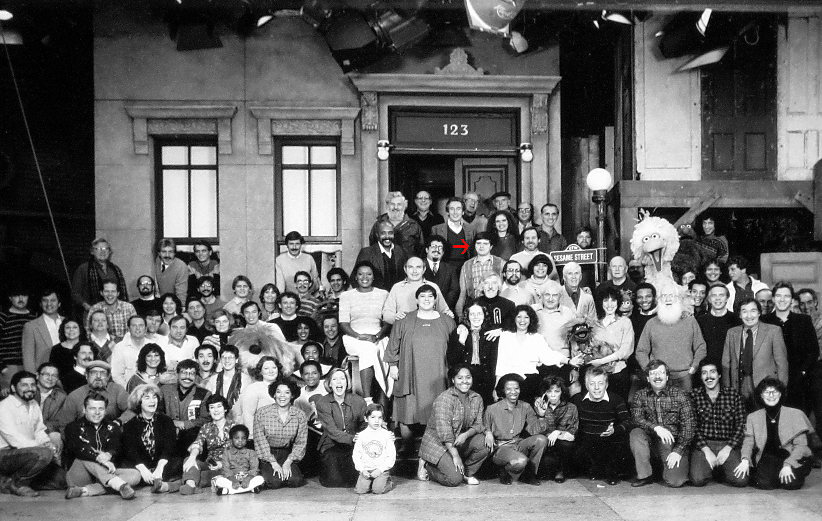
Happy 40th Sesame Street! -science and art

Thank you Sesame Street for teaching me the love of learning through the arts.  Well, the art of Rock and Roll, and installations.  Those puppets were so well crafted, the environment - that was fine art at it's best.  I don't believe that a medium is what divides art from craft - so I liberate you artists - go forth and use cloth, feathers, strings, googly eyes, and foam.  Make some greatness!


This song stuck in my head for YEARS!!!  thank a lot cooperation!  TO THIS DAY I BELIEVE IN VOLUNTEERING..   (totally kidding)  If anything formed by belief in sharing - this song and SM St. did.   Hey people dig it;  Cooperation, makes it happen!


And dude - what happens if you can't get no cooperation!  Their version of the Rolling Stones song


And where would this recent flu pandemic be without the 10 commandments of health - out of control I say -->  10 commandments of health


I developed my love of rock and roll, art and science via sesame street, so if you can't dig it then scram


Feist still teaches us how to count


They taught me to measure, which is very important in science, and in art!:

Most importantly

They made me value every moment with those around me, realizing I couldn't put time in a bottle, when Mr. Cooper died, and when Mr. Hensen himself died....  those who we love we should cuddle them forever in our arms like it was our last moment, because those are always hiding around the corner.  We  - no matter how much we wish - can't put time in a bottle.

Google talk about Sesame Street's 40th Anniversary:
http://www.youtube.com/watch?v=RHWQLb3eoVg


Sesame Street even taught us to breathe


Thank you New York Times for the inspiring article and these images which you can find both at:

Thursday, October 29, 2009

Work about loss - collections and perserving living things: The work of Dianne Kornberg

This piece - I saw it and it stopped me dead in deleting e-mails.  This is work i WISH i created!


India Tiger 21
Dianne Kornberg
Carbon Ink Print
12x15"
Edition of 15
Copyright ©2008

image taken from: http://dianekornberg.com/Portfolio.cfm?nK=6624&nL=1&nS=0 
Dianne Kornberg, India Tiger 16, 2009, pigment ink print on rag paper, 13 x 10 inches


"Dianne Kornberg's India Tigers is a recent digital printing of a collection of austere
photographs of moths and butterflies from India, preserved in folded, triangular
paper wrappings. Kornberg is known for her rigorous observations of the natural world,
expressed as scientific photography of reserved animal and plant specimens. These
photographs attempt to capture the elusive, fleeting elements of life and science. India
Tigers also celebrates the launch of Kornberg's most recent artist book, published by Franklin,
Beedle & Associates, with essays by Clint Willour and Kim Stafford. A book launch will be held
Friday, November 6th, from 6-8 pm.

Dianne Kornberg received her MFA from Indiana University in 1970, and first exhibited her
work at the Elizabeth Leach Gallery in 1993. Her work is included in the collections of the Art
Museum at Princeton University, the International Center for Photography, the Seattle Art
Museum and the Portland Art Museum.
"
 Taken from the  ELIZABETH LEACH GALLERY
Portland, Oregon 97209
www.elizabethleach.com  


Raven Skull
Gelatin-Silver Print
34x20"
Edition of 12
Copyright (c) 1993  -->  Image taken from: http://dianekornberg.com/Portfolio.cfm?nK=6199&nL=1&nS=0


Here is her eloquent Artist's Statement from her website:  http://dianekornberg.com/


"Over the years I have been exploring the range of ways in which narrative, as well as the elusive, mysterious, or ephemeral elements that are inherent in the natural world can be visually expressed. My work is informed by my background in science, my training as a painter and twenty-five years of photographing. For the past fifteen years the primary subjects of my work have been biological and botanical specimens collected for scientific study in laboratory settings. In 2000 I began digital printmaking—for me, a hybrid medium of painting, printmaking and photography that allows me to combine the attributes of graphic media with photographic rendering.

In the 1980’s I worked primarily with found objects that had been transformed by natural processes, often adding paint, clay, and other graphic materials in the constructions.  In 1990 I began applying these processes to biological specimens from college laboratories. I have used collected bones, insects, animals, and plants. Although the specimens are preserved, they also signify a transience that takes on particular meaning for me as habitat for beautiful and wild living things is depleted.


I find these preserved specimens extraordinary.  They carry metaphoric and aesthetic content that I try to represent.  While their purpose is to provide evidence of species and material for scientific research, a visual elegance underlies the erosions of time and use.  Primarily, it is this that I am after. I find myself returning to life forms and processes as a way to address the resonance between the structural complexity through which nature encodes and renews itself and the metaphors we reach for to make sense of our own lives.
"


Of Course - I can't wait to see more images - so here they are!
O.k. Science and Art fans - commence geeking out right NOW!
 
Dianne Kornberg
Toned Gelatin-Silver Print
40x50"
Edition of 4
Copyright ©1995  -->  Taken from :  http://dianekornberg.com/portfolio.cfm?nK=6244&nS=0&nL=1


Cartwheel 6
Dianne Kornberg
Toned Gelatin-Silver Print
40x50"
Edition of 4
Copyright ©1995  
image taken from -->  http://dianekornberg.com/portfolio.cfm?nK=6244&nS=0&nL=1

  Porphyra
Diane Kornberg
Pigment Print
24x32"
Edition of 15
Copyright ©2005  image taken from:  http://dianekornberg.com/portfolio.cfm?nK=6250&nS=9&i=70159


Coho
Dianne Kornberg
Toned Gelatin-Silver Print
24x20"
Edition of 3
Copyright ©1989


Twelve Cats
Dianne Kornberg
Toned Gelatin-Silver Print
40x50"
Edition of 6
Copyright ©1992


Jack-in-the-Box 1
Dianne Kornberg
Toned Gelatin-Silver Print
20x24"
Edition of 3
Copyright ©1996  --->  Image taken from her site at:  http://dianekornberg.com/portfolio.cfm?nK=6245&nS=0&nL=1


Insecta 8
Dianne Kornberg
Toned Gelatin-Silver Print
40x32"
Edition of 2
Copyright ©1997

image taken from:  http://dianekornberg.com/portfolio.cfm?nK=6246&nS=0&i=71079


nsecta 5
 
Toned Gelatin-Silver Print 

Dianne Kornberg
40x32"
Edition of 1  

Copyright ©1997
image taken from her site:  http://dianekornberg.com/portfolio.cfm?nK=6246&nS=0&i=71079


Celebration 4
Diane Kornberg
Pigment Print
24x34"
Edition of 15
Copyright ©2004  -->  image taken from: 
http://dianekornberg.com/Portfolio.cfm?nK=6204&nL=1&nS=9


In my own work - I was trying to do something similar with the "Settled In" series - but I think this is far better.  The images, the thought, I don't know - I'm just in Awe. 


"Settled in Series"
Abbi Allan  (and author of this site)

Summer, 2009

Ceramics, oil paint, glue, wood, and butterfly wings.
Copyright (c) 2009


But it's NOTHING like these!: